
Introduction
In the competitive world of food manufacturing, understanding the nuances of the biscuit production process is crucial for ensuring consistent quality, maximizing yield, and maintaining profitability. At New Neat Machine (New Neat New Energy Technology Co., Ltd.), we understand that biscuit making is not just about baking—it is a precise engineering feat consisting of mixing, forming, baking, and cooling.
This article details the standard industrial workflow for biscuit production, highlighting how advanced machinery optimizes every stage.
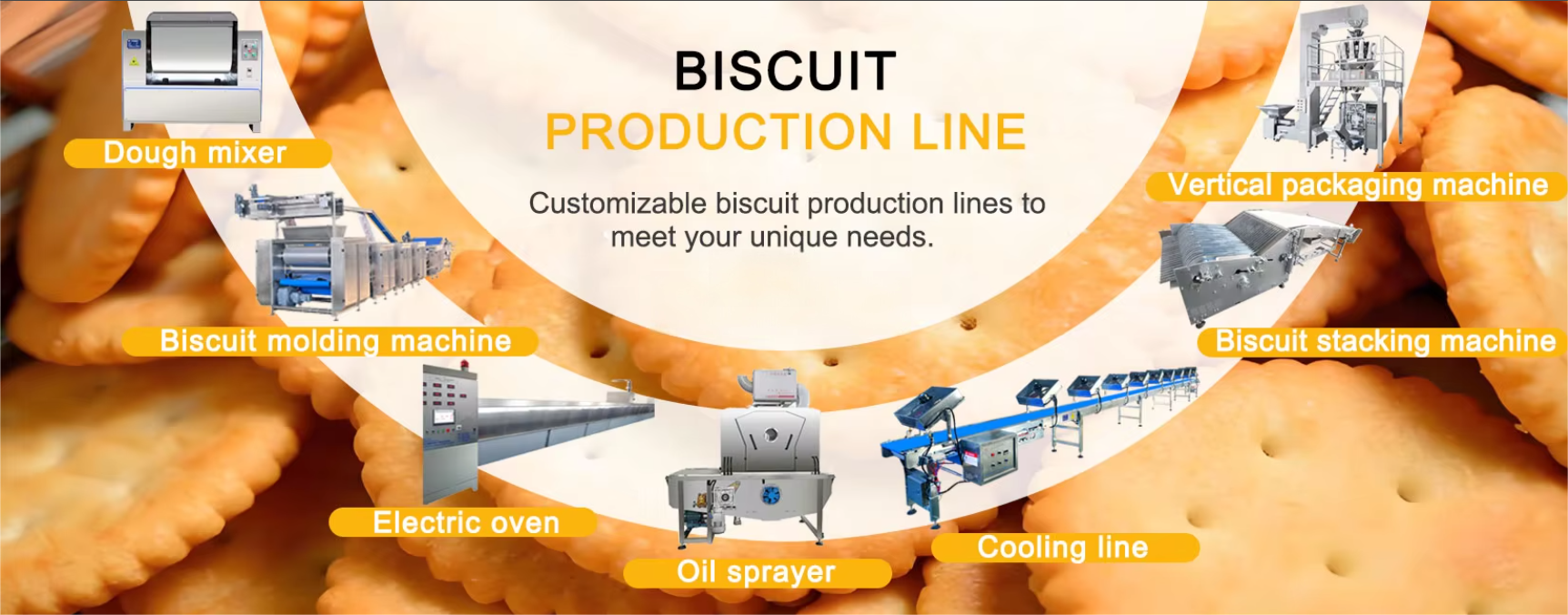
1. Dough Mixing and Preparation
The foundation of every high-quality biscuit lies in the dough. The process begins with the precise weighing and feeding of raw ingredients—typically wheat flour, sugar, fats, water, and leavening agents—into an industrial Dough Mixer.
- The Machine’s Role: Different biscuits require different mixing techniques. Vertical or horizontal mixers are used to blend ingredients into a homogenous mass.
- Hard doughs (for crackers) require fermenting and extensive mixing to develop gluten.
- Soft doughs (for cookies) require less mixing to prevent gluten development, ensuring a crumbly texture.
- Efficiency Tip: Modern automated feeding systems reduce human error and ensure recipe consistency.
2. Forming and Shaping
Once the dough is rested (if necessary), it moves to the forming stage. The machinery used here depends entirely on the type of biscuit being produced.
- Rotary Moulding (Soft Biscuits): For high-fat doughs like shortbread or digestive biscuits, a rotary moulder forces dough into engraved moulds to create specific shapes and designs.
- Laminating and Cutting (Hard Biscuits): For crackers and hard sweet biscuits, the process involves a laminator that layers the dough to create a flaky texture. The dough sheet is then passed under rotary cutters to stamp out shapes.
- Extruding/Depositing: Used for wire-cut cookies where soft dough is pushed through nozzles directly onto the oven band.
3. The Baking Process
The formed raw biscuits travel on a conveyor belt into the heart of the production line: the Tunnel Oven. This is continuously moving machinery where the chemical changes occur.
- Zoned Heating: High-quality tunnel ovens utilize multiple heating zones.
- Entrance Zone: Rapid heating creates the biscuit structure and lift.
- Middle Zone: Sets the shape and completes the cooking.
- Exit Zone: focus on coloration and moisture reduction.
- Energy Source: Modern ovens often run on gas or electricity, with a focus on energy efficiency—a core value at New Neat New Energy Technology.
4. Cooling
Biscuits leaving the oven are too hot and soft to be packaged immediately. If packed hot, condensation would form inside the wrapper, ruining the shelf life.
- Conveyor Cooling: Biscuits are transferred to cooling conveyors. This stage allows the fats to recrystallize and sugars to harden, giving the biscuit its characteristic “snap” or crunch.
- Space Management: In factories with limited floor space, spiral cooling conveyors or overhead tiered conveyors are often utilized to extend the cooling path without expanding the footprint.
5. Packaging and Quality Control
The final stage is automated packaging. Before wrapping, optical sorters or visual inspection systems often check for broken or burnt biscuits.
- The Equipment: Flow wrapping machines or high-speed boxing lines ensure the product is sealed airtight to preserve freshness.
- Metal Detection: As a critical safety standard, metal detectors check the final product before it is cased for shipping.
Why Equipment Matters
A recipe is only as good as the line it runs on. Inconsistencies in oven temperature can lead to burnt edges, while poor mixing can ruin batch texture.
At New Neat Machine, we specialize in customizing intelligent production lines that address these specific challenges. Whether you are scaling up from a bakery to a factory, or optimizing an existing line for sustainability and speed, choosing the right machinery partner is the final ingredient in your recipe for success.
For inquiries about customizing your production line with sustainable, intelligent equipment, contact us today.