
Search
Search
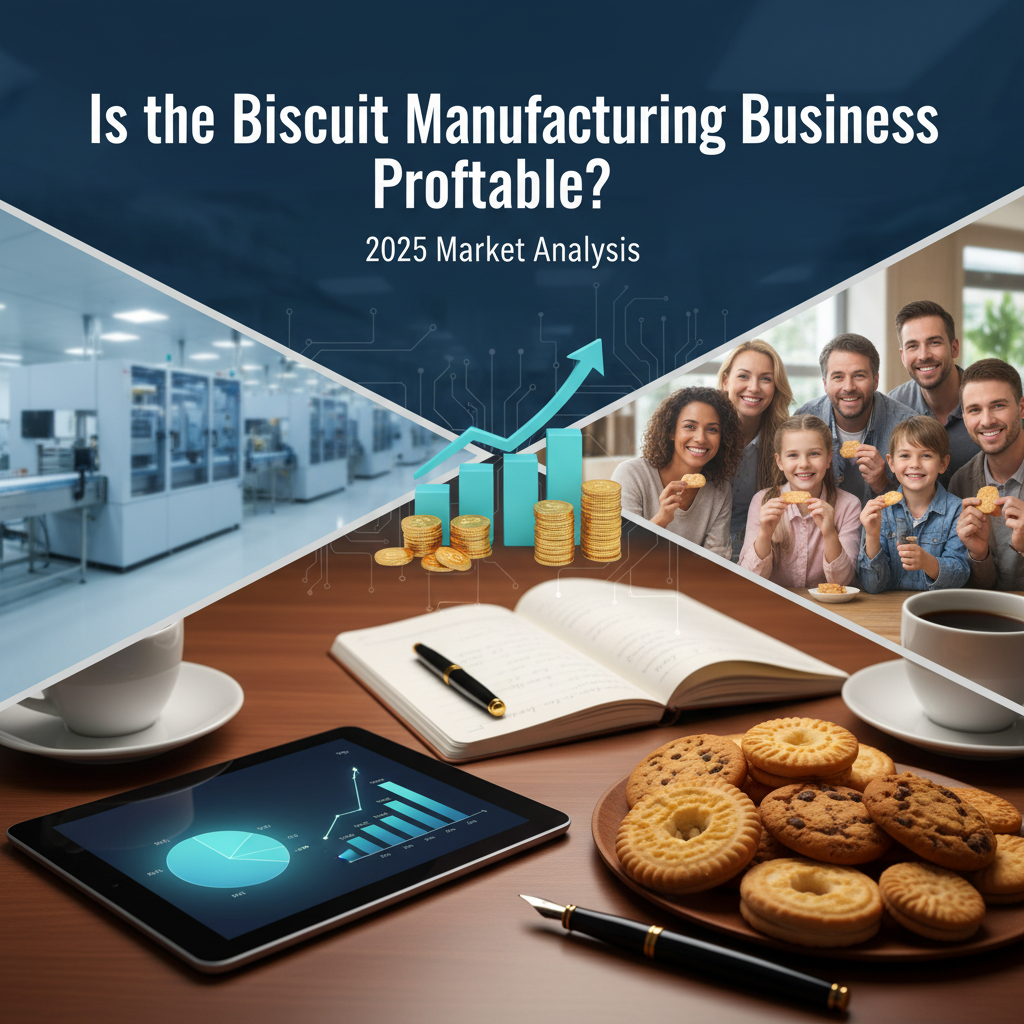
Is the Biscuit Manufacturing Business Profitable? 2025 Market Analysis
For entrepreneurs looking to enter the food manufacturing sector, one question stands above the rest: Is the biscuit business profitable?
The short answer is yes. However, success in this industry is not just about baking a tasty treat; it is about volume, efficiency, and technology. According to recent market reports, the global biscuit market is increasing from $127.99 billion in 2024 to an estimated $134 billion in 2025, growing at a steady annual rate (CAGR) of roughly 4.7%.
Here is a detailed breakdown of why this industry remains a high-profit venture and how the right production line determines your margins.
1. High Demand & Recession Resistance
Biscuits are a staple food product. Unlike luxury goods, biscuit consumption remains stable even during economic downturns. Whether it is a low-cost glucose biscuit for energy or a premium butter cookie for gifting, the demand is constant.
- Market Insight: The “Sweet Biscuit” segment specifically is projected to grow significantly through 2030. This ensures a hungry market for your output from day one.
2. The Role of Automation in Profit Margins
The primary differentiator between a bakery with low margins and a factory with high profits is automation. Manual production involves high labor costs and inconsistent quality. In contrast, an Automatic Biscuit Production Line dramatically lowers the “cost per unit.”
- Consistency: Automated mixers and moulders ensure every biscuit weighs exactly the same, eliminating raw material waste.
- Speed: A high-speed tunnel oven can produce thousands of kilograms per hour, allowing you to scale up without increasing headcount.
3. Energy Efficiency = Higher Net Profit
In manufacturing, your fuel bill is often your biggest expense after raw materials. This is where New Neat Machine provides a competitive edge. Older ovens waste heat, eating into your profit margins. Our modern Tunnel Ovens are engineered with advanced insulation and energy-recovery systems.
- The Math: If you save 15% on gas or electricity compared to a competitor using outdated equipment, that 15% goes directly to your net profit.
4. Product Versatility
A profitable factory does not just make one thing. Trends change—one year “Digestive” biscuits are popular, the next year it is “Thin Crackers.” Investing in versatile equipment, such as a line that includes both a Rotary Moulder (for soft cookies) and a Laminator/Cutter (for hard crackers), allows you to pivot quickly to meet market trends without buying a whole new machinery set.
Conclusion: The Machinery Makes the Margin
The biscuit business is highly profitable for those who treat it as a precision operation. The market is growing, but the competition is fierce. To secure your slice of the $134 billion market, you need machinery that guarantees low waste, high energy efficiency, and continuous operation.
Are you planning to start a biscuit factory? [Contact New Neat Machine] today. Let us help you plan for a production line tailored to your budget and business goals.