
Search
Search
Essential Machines Used in a Biscuit Factory: A Complete Production Line Guide
By New Neat Machine | Production Line Guides
Setting up or upgrading a biscuit factory requires more than just a recipe; it requires a chain of precision engineering. In industrial manufacturing, the “recipe” is actually defined by the machinery. A slight variation in mixer speed or oven temperature profile can completely change the texture of the final product.
At New Neat New Energy Technology, we specialize in full-line solutions. Below, we break down the essential machines used in a modern biscuit factory and their specific roles in the production process.
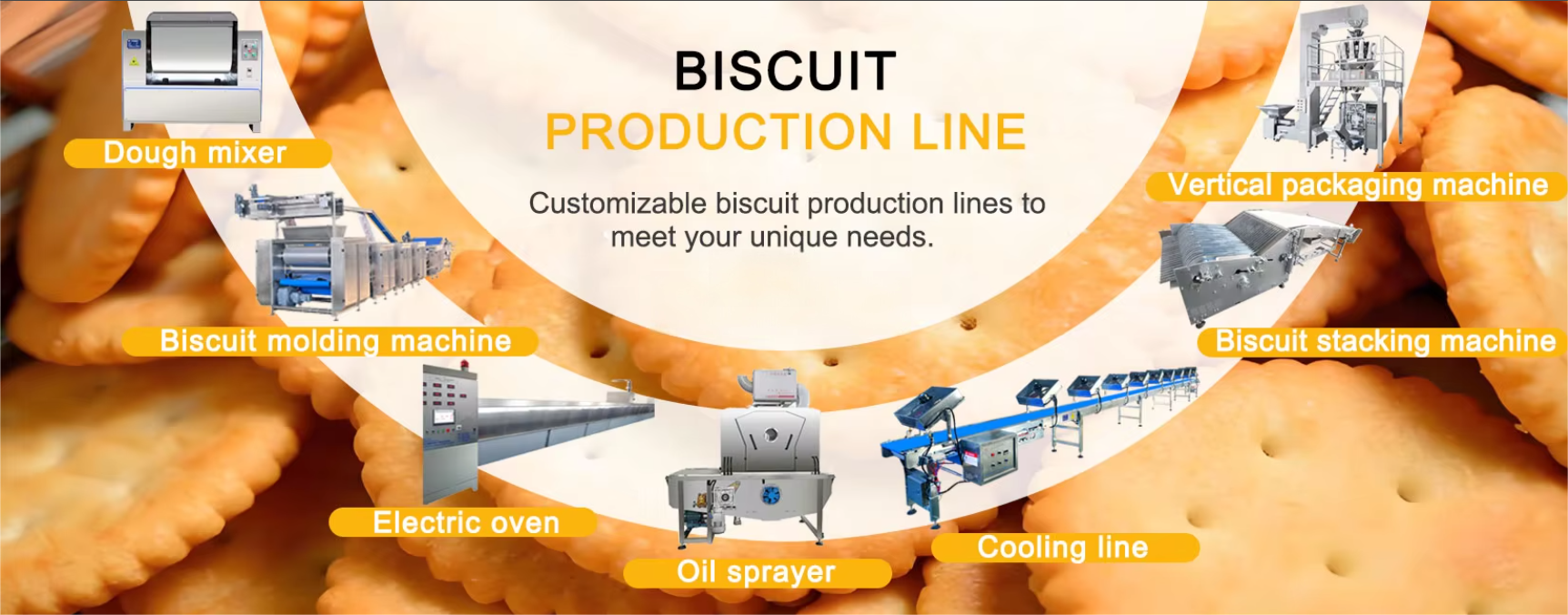
1. The Dough Mixer: Where Texture Begins
The first machine in any line is the Industrial Dough Mixer. It is not just about combining ingredients; it represents the first stage of gluten control.
- Vertical/Planetary Mixers: Typically used for fermenting doughs (like crackers) or cream mixing.
- Horizontal Mixers: The standard for high-speed production. They rapidly blend flour, fats, sugar, and water.
- Expert Note: For hard biscuits (crackers), mixing is longer to develop gluten (elasticity). For soft biscuits (cookies), mixing is shorter to keep the dough “short” and crumbly.
2. Dough Forming Machinery (The Heart of the Line)
Once mixed, the dough must be shaped. The machinery here changes completely depending on whether you are making Hard Biscuits or Soft Biscuits. A versatile factory often needs interchangeable modules.
A. For Hard Biscuits (Crackers & Sweet Biscuits)
- Laminator: This machine folds the dough into multiple layers (sheets). This is what gives crackers their flaky, crispy structure.
- Gauge Rolls: These heavy steel rollers reduce the dough sheet to a precise thickness before cutting.
- Rotary Cutter: A rolling stamp that cuts the dough sheet into shapes (circles, squares, animals). The leftover “scrap” dough is automatically returned to the beginning of the line.
B. For Soft Biscuits (Cookies & Shortbread)
- Rotary Moulder: Soft dough cannot be sheeted (it would fall apart). Instead, this machine forces the dough into engraved moulds on a rotating drum and extracts them directly onto the conveyor belt. This is used for high-fat biscuits like digestive biscuits or butter cookies.
[View Biscuit Forming Machines]
3. The Tunnel Oven: Baking and Energy Efficiency
The Tunnel Oven is the most critical machine for product quality and the largest consumer of energy in the factory. The shaped raw dough enters on a metal mesh or steel band and passes through controlled heating zones.
- Direct Gas Fired (DGF): Often used for the first section to give a strong “lift” and rapid structure to the biscuit.
- Convection / Cyclotherm: Used in later zones to evenly dry the biscuit and control coloring without burning.
- Energy Tech: As our name New Neat New Energy Technology implies, modern ovens focus on heat recovery and insulation to lower operating costs while maintaining stable baking profiles.
[Our High-Efficiency Tunnel Ovens]
4. Oil Sprayer (Optional)
Immediately after baking, warm biscuits may pass through an Oil Sprayer. This machine applies a fine mist of warm oil, which gives crackers their glossy shine and creates an adhesive surface for salt or spices to stick to.
5. Cooling Conveyors
You cannot package a hot biscuit. If a biscuit is wrapped while hot, moisture will get trapped inside the package, turning the biscuit soggy within days.
- The Process: Biscuits travel on long cooling conveyors (often elevated to save floor space). This natural cooling allows the fats to resolidify and the sugars to set, creating the characteristic “snap.”
6. Packaging Lines
The final step is the Flow Wrapper or Packaging Machine. Modern lines use automated stackers and feeders to align the biscuits before they are wrapped in high-barrier films to ensure a long shelf life.
Why Professional Equipment Matters
In the biscuit industry, “consistency” is the currency of success. Industrial machinery allows you to replicate the exact same biscuit weight, color, and texture 100,000 times a day.
Whether you are looking for a specific Rotary Moulder to expand your cookie range, or a complete Turnkey Biscuit Production Line, the quality of your machinery dictates the quality of your product.
Ready to optimize your production? Contact New Neat Machine today for a consultation on our energy-efficient manufacturing solutions.